Custom Teacher Patch Embroidery Design Review
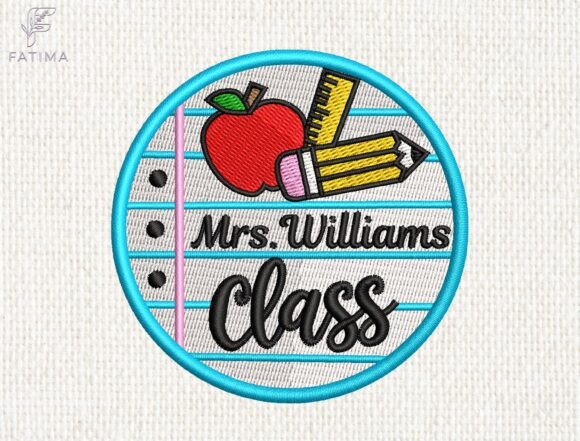
As an embroidery designer who has stitched out countless school-themed projects for clients and my own small shop, I approach every new machine embroidery design with a critical eye. It is not enough for a digitized file to look good on a computer screen; it must perform under the needle and hold up to real-world wear. When evaluating the Custom Teacher Patch Embroidery Design, my first impression was one of nostalgic charm mixed with practical versatility. The concept of a round patch featuring a classic notebook paper background immediately signals "school" without being overly juvenile. This aesthetic strikes a difficult balance: it is playful enough for elementary educators yet refined enough for high school teachers or university staff to appreciate as a personalized gift.
The visual personality of this design feels authentic to the classroom experience. The notebook paper motif provides a structured canvas that naturally frames custom text, making it an ideal candidate for personalization. From a design perspective, the round shape is universally flattering on garments and accessories, avoiding the boxy look that some patches can have. However, as with any embroidery project, the success lies in the execution. Before loading this digital embroidery file into your machine, it is vital to understand how its specific characteristics translate to fabric, stabilizer choices, and final product value.
Real-World Application: Stitching for Educators
To truly judge this design, I mentally placed it in a recent client scenario: creating a batch of custom canvas tote bags for a school district’s teacher appreciation week. Teachers carry heavy loads, from books to laptops, so the tote bag design needs to be durable and legible. The Custom Teacher Patch Embroidery Design fits this use case exceptionally well because the round format centers beautifully on a tote, acting as a focal point rather than competing with the bag's seams or pockets.
In this application, the notebook paper background likely utilizes fill stitch techniques to mimic lined paper. For a tote bag, this is advantageous because fill stitches cover ground quickly and create a stable base for any overlaid text or appliqué elements. If you are an Etsy seller or run a craft business, this design offers high perceived value. A generic "Teacher" patch is common, but a customized patch that looks like actual notebook paper tells a story. It transforms a standard handmade product into a keepsake. I can also envision this working brilliantly on denim jackets or sweatshirts. The contrast of the structured patch against the casual texture of denim or fleece creates a professional yet approachable look that educators love to wear during off-hours or casual Fridays.
Navigating Fabric Textures and Stabilizer Choices
While the design is versatile, the "notebook paper" element introduces specific technical considerations regarding fabric texture. Paper is smooth; fabric is not. If you are stitching this onto a textured towel or a ribbed knit, the illusion of paper can break down if the stitch density isn't adequate. You must ensure the underlay is sufficient to flatten the fabric grain before the top stitches lay down. Without proper stabilization, the "lines" of the notebook paper may waver, ruining the crisp aesthetic.
For stretchy fabrics like t-shirts or lightweight knits, caution is required. A dense patch design can cause puckering if the hoop size is too large or the stabilizer is too weak. I recommend using a cut-away stabilizer for any apparel application to support the weight of the patch long-term. If you are creating an embroidered patch to be ironed on later, verify that the design includes a proper border or edge finish. Some designs assume they will be stitched directly onto a garment, while others are intended as standalone patches. Always check the designer’s notes or test stitch to confirm which method the Custom Teacher Patch Embroidery Design supports.
Legibility and Detail Management
The most critical aspect of any personalized teacher design is the text. Notebook paper backgrounds often involve horizontal lines, which can compete with lettering if not managed correctly. When customizing this design, pay close attention to thread colors. High contrast is non-negotiable. Dark blue or black text on white paper reads clearly; pastel text on white paper will disappear in photographs and from a distance. If the design uses satin stitch for lettering, ensure the column width is appropriate for the font size. Tiny text should be converted to a running stitch or a specialized small-text font to prevent thread breaks and illegibility.
For those selling custom apparel, remember that customers often view listings on mobile devices. If the details of the notebook paper or the custom name are lost in a thumbnail, the sale might be lost too. Test your color combinations in both natural light and indoor lighting to ensure the design maintains its integrity across different viewing environments.
Commercial Viability and Product Safety
For small shop product creators and commercial embroiderers, time is money. This design appears to be optimized for efficiency, but you must verify the stitch count and jump stitches before committing to a production run. Excessive trims slow down machines and increase labor costs. Run a test on scrap fabric identical to your final product. This step is mandatory, not optional. Check for registration issues where the "paper" background meets the border or text. Misalignment in a geometric design like notebook paper is immediately obvious and looks unprofessional.
Consider the end-user care instructions. Teachers are busy, and their items get washed frequently. Ensure your thread colors are colorfast and that the stabilizer used can withstand industrial laundering if necessary. If you are marketing this as a holiday embroidery item or end-of-year gift, emphasize durability in your product descriptions. Buyers trust sellers who demonstrate technical competence. Mentioning that you have tested the design for washability builds confidence.
Digital Presentation and Mockups
If you sell the finished physical product or the digital assets themselves, presentation matters. Use realistic printable mockup templates that show the patch on actual school-related items. A flat image of the design does not convey scale or texture. Show it on a backpack strap, a lanyard, or a mug cozy to spark ideas for the buyer. However, never misrepresent the design. If the applique design component requires specific fabric types, state that clearly. Transparency reduces returns and negative reviews.
Finally, always confirm licensing. Just because a design is available for purchase does not mean it is cleared for unlimited commercial reproduction or resale as a digital file. Respect the intellectual property of the original digitizer. Understanding these boundaries is part of being a professional in the commercial embroidery space.
Final Verdict for Makers
The Custom Teacher Patch Embroidery Design holds significant promise for makers targeting the education niche. Its strength lies in its thematic clarity and adaptability to various school contexts. Whether you are stitching a one-off baby embroidery item for a teacher’s new child or producing fifty matching polos for a department head, the design offers a solid foundation. Success depends entirely on your technical preparation: matching the right stabilizer to the fabric, ensuring high-contrast customization, and validating the stitch-out quality before production. Treat this design as a collaborative tool rather than a plug-and-play solution, and it will serve your business and your clients beautifully.