Write Your Story Baby Quote: Craft Fair Review
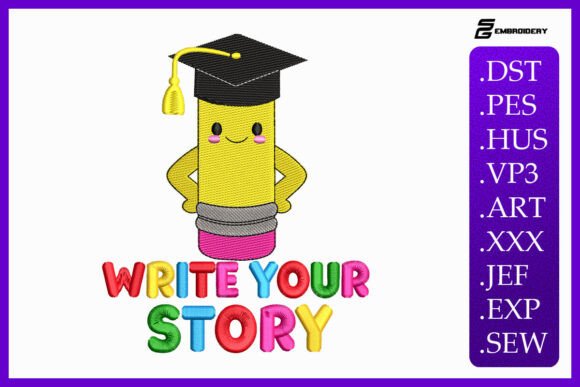
As I organize my inventory for the upcoming weekend craft fair, I am constantly evaluating which designs will actually move off the table. It is not enough for a machine embroidery design to be cute on a screen; it must translate into a tangible, high-value item that catches a shopper's eye from three feet away. This week, I am reviewing the "Write Your Story Baby Quote" design to determine its viability for my booth display and online shop. Featuring a charming pencil character wearing a graduation cap, this design celebrates learning and growth, but does it have the commercial staying power needed for a busy market season?
First Impressions and Visual Appeal
My initial assessment of Write Your Story Baby Quote is that it strikes a difficult balance between whimsical and meaningful. The aesthetic leans toward modern nursery decor rather than rigid academic imagery. While it falls under the Back To School category, the sentiment is soft enough for year-round baby gifts. The pencil character adds a necessary playful element that prevents the quote from feeling too serious or text-heavy. For an Etsy seller or boutique maker, this visual hook is crucial. Customers at craft fairs often scan tables quickly; the recognizable shape of the pencil combined with the graduation cap creates an instant focal point that communicates the theme before they even read the text.
The design feels premium yet accessible. It avoids the cluttered look of some novelty embroidery, suggesting clean lines and intentional spacing. This minimalism is a strength for production because it reduces the risk of registration errors on varied fabrics. However, as a designer, I immediately note that the success of this piece relies entirely on thread contrast. If the pencil outline is too thin or the text color blends into the fabric, the impact is lost. This is a design that demands intentionality in color selection to maintain its cheerful, inspiring mood.
Best Product Applications for Market Sales
When planning my table layout, I have to decide where Write Your Story Baby Quote will perform best. Not every embroidery file works on every substrate. Based on the motif and size potential, here is how I rank its application for handmade products:
- Baby Milestone Blankets and Pillows: This is the primary revenue driver. The quote pairs perfectly with personalized baby items. As a centerpiece on a pillow cover or blanket corner, it justifies a higher price point due to the emotional connection.
- Tote Bag Design: A canvas tote featuring this design appeals to teachers, librarians, and new parents. The sturdy fabric of a tote supports the stitch density well, and the large surface area allows the pencil character to shine without distortion.
- Tea Towel Embroidery: For a lower-priced impulse buy at the front of the booth, tea towels are ideal. The "write your story" sentiment works beautifully in a kitchen or nursery context. Flour sack towels provide a smooth texture that keeps small lettering crisp.
- Embroidered Patch: Creating patches for resale allows customers to customize their own gear. This design’s distinct silhouette makes it an excellent candidate for patch production, expanding your product line without requiring finished goods inventory.
I would hesitate to use this specific design on curved caps unless the digitizing is specifically optimized for 3D foam or curved surfaces. The combination of text and a detailed character can easily distort on the limited flat stitching area of a hat. Similarly, while apron embroidery is popular, ensure the placement is high enough to be visible when worn, as the bottom hem often gets obscured.
Production Practicality and Booth Display
For a craft fair product to be profitable, it must be efficient to produce. Write Your Story Baby Quote appears to be batch-friendly. The color changes seem logical, minimizing thread trims and machine stops. This efficiency is vital when fulfilling custom orders during the busy holiday rush. From a display perspective, this design photographs exceptionally well. The clear iconography translates to thumbnails, making it a strong contender for digital listings and printable mockups. When setting up my physical booth, I plan to group items featuring this design together to create a cohesive "Learning & Growth" collection. This merchandising strategy increases perceived value and encourages multi-item purchases.
However, repeatability depends on your stabilizer choice. Because the design likely includes both fill stitches for the pencil and satin stitches for the text, using the correct backing is non-negotiable. On stretchy knits for baby onesies, a cut-away stabilizer is mandatory to prevent puckering. For woven cottons like tea towels, a tear-away may suffice, but always test first. A distorted design looks unprofessional and devalues your brand. Consistency across ten tea towels builds trust; inconsistency loses repeat customers.
Critical Technical Considerations
Before loading this digital embroidery file into your machine for commercial production, you must address several technical risks. As an experienced digitizer reviewer, I urge you to check the following:
- Small Lettering Clarity: Quotes often contain small text. Verify the minimum height of the letters. If they are under 4mm, they may disappear on textured fabrics like terry cloth or fleece. You may need to simplify the font or increase the size for certain products.
- Stitch Density Management: Graduation caps often involve dense fill areas. If stitched directly onto thick fabric without proper underlay, this can cause needle breaks or fabric tunneling. Check if the design includes adequate underlay stitches.
- Fabric Texture Compatibility: Avoid placing intricate details of the pencil character on high-pile fabrics. The texture will swallow the definition. Stick to smooth, tight-weave fabrics for the best representation of the artwork.
- Hoop Size Verification: Confirm the dimensions fit your most commonly used hoops. Resizing a complex design with text can alter stitch angles and spacing. Always verify the native size before attempting significant scaling.
Designer Notes for Commercial Success
To maximize the ROI on Write Your Story Baby Quote, treat your preparation phase as seriously as the stitching phase. Never run a production batch without a sew-out on the exact fabric you intend to sell. Photograph this test sample in natural light to check for shadow issues caused by dense stitching. Compare thread colors against your fabric inventory; a yellow pencil on cream fabric lacks contrast, whereas a navy outline pops beautifully.
Furthermore, review the licensing terms included with the design assets. Ensure you have the right to sell finished products commercially, especially if you plan to scale this into a core collection. Document your successful settings—stabilizer type, needle size, tension adjustments, and hoop size—in a production log. This saves hours of troubleshooting later. Finally, create at least one real-life mockup for your Etsy listing. Buyers need to see the scale of the pencil character relative to the product. A digital rendering cannot convey the tactile quality of embroidery. By validating these practical elements, you transform a cute digital file into a reliable, profitable handmade product that resonates with customers celebrating new beginnings.